
THE FOOL archetype
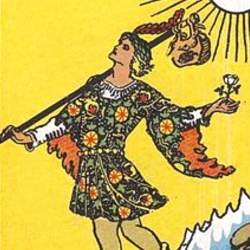
“Every man is a divinity in disguise, a god playing the fool.” – Ralph Waldo Emerson
The 22 Major Arcana cards of the tarot deck tell us the story of the archetypal journey of the Fool who, in his naïveté, sets off on an adventure into the great unknown. He is not particularly knowledgeable or brave, but he is sincere, cheerful, carefree, open-minded and unbiased. It is this basic simplicity, purity, and innocence that protect him as he sets out on his new path, leaving behind hearth and home and all that is familiar.
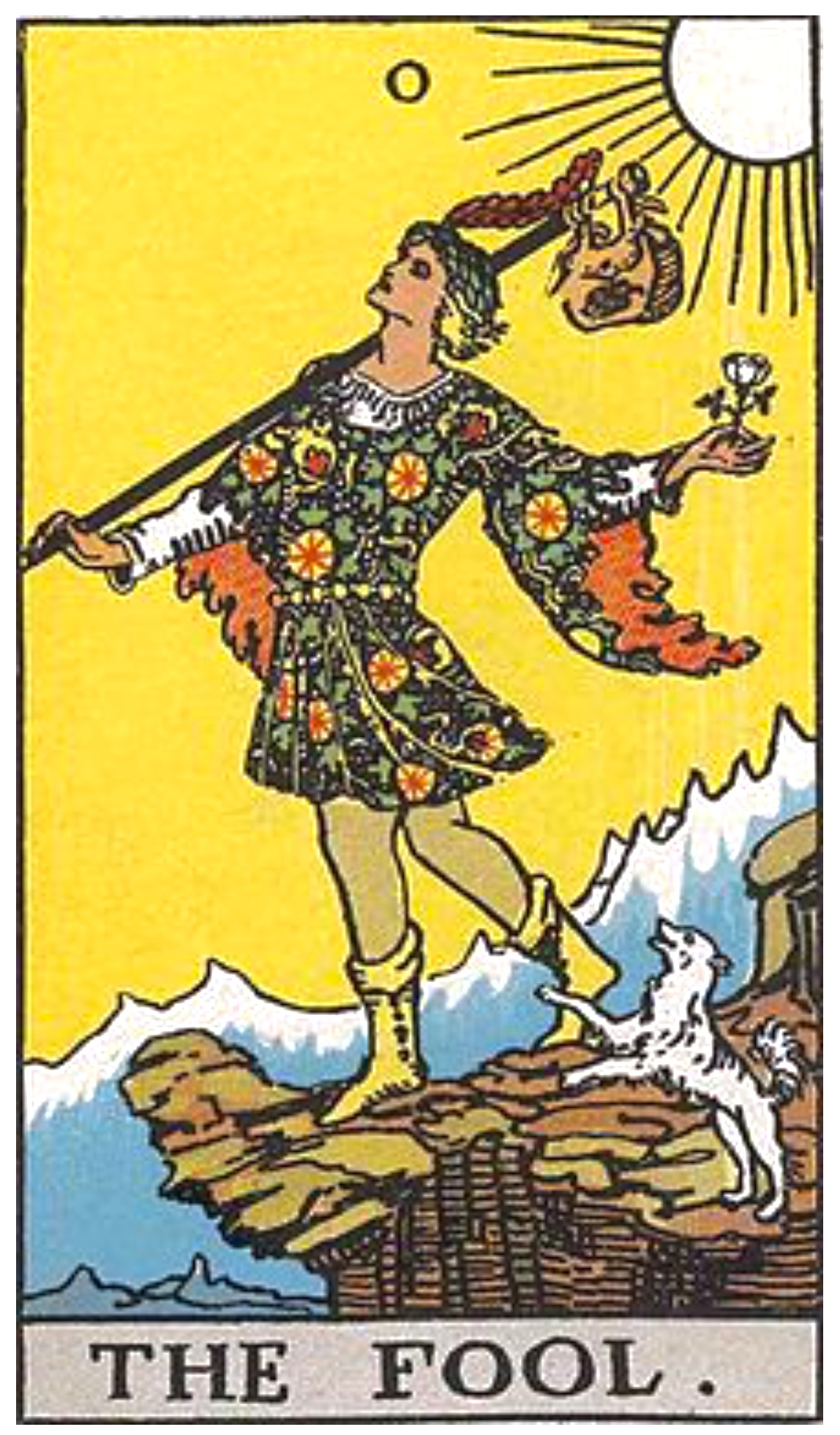
In traditional tarot decks, The Fool is usually poised upon and about to step off the edge of a cliff, but the small dog that accompanies him – representing his primal instinct – entices him in a different direction, so that he never realizes how close to the abyss he stood. The snow-covered mountains hint of the heights he will have to climb in search for his, as yet unknown, goal of self-knowledge. The Fool personifies our childlike nature, before we become entrenched in rigid opinions and concepts, blocking our ability to stay open to new perspectives and insights.
The Fool, though very different in many ways, is loosely related to the “Crazy Wisdom” of The Trickster, Jester, of Sacred Clown of other cultures and religions – from Saints Simeon and Isadora (Western Christianity) and Mullah Nasruddin (Sufi Islam), to the Heyokah (Lakota people of North America), and Han-Shan (Zen Buddhism). These trickster archetypes are generally unconventional in nature; they speak, move, and react in a fashion that’s opposite to the people around them. They often provoke laughter in distressing situations, and their actions remind people not to take themselves too seriously. They are jokers, truth tellers, storytellers, and they all embody an air of childlike purity and unpredictability. Because there are so many ways to interpret The Fool archetype, you may explore a variety of different aspects by making multiple cards, so keep your heart and mind open to all possibilities.
And so our journey begins, as we answer the age-old “Call to Adventure,” invoking playful innocence and trust in our instinctive nature.
(*Note: Each archetype is represented as either masculine or feminine in traditional tarot decks, but remember that each of us embodies both aspects – animus (male aspect of the female psyche) and anima (female aspect of male psyche,) so feel free to work with any images, feminine or masculine, that speak to you along the way.)
Course Syllabus
-
THE FOOL archetype Lesson 1
Lesson content here..links, images, text, etc..
Add Your Review